10 / 19
Stop 10Room 2: the painted vessels
The krater with bucrania from Târgu Ocna
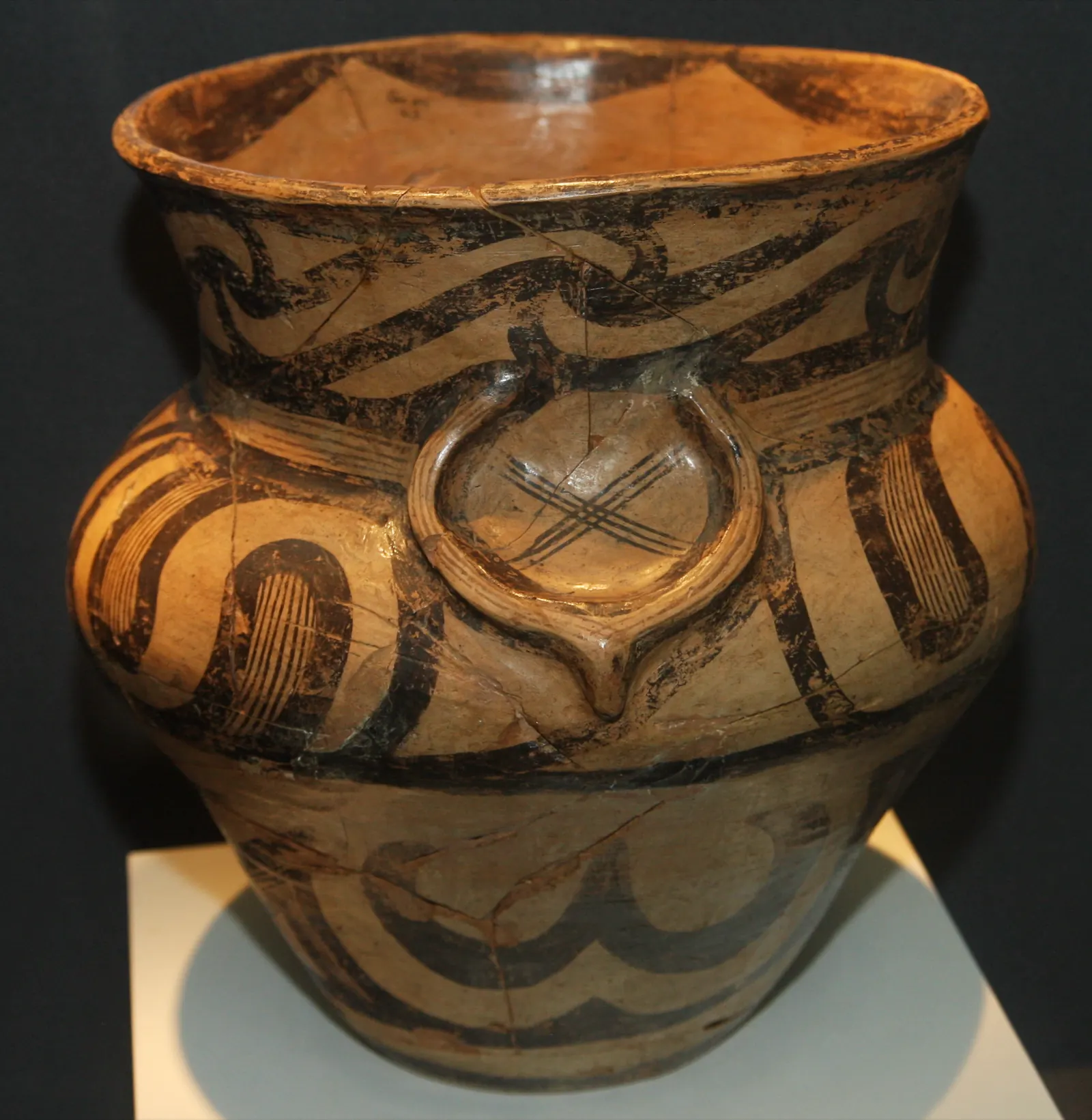
This large, wide-mouthed vessel is called a krater. It comes from Târgu Ocna, from the Podei plateau in Bacău County, where a Cucuteni B settlement was discovered. The houses there had walls of woven branches plastered with clay.
- Period
- Cucuteni B (c. 3850–3500 BC)
- Material
- Painted pottery
- Where it is
- Room 2: the painted vessels, ground floor
Read the textHide the text
Narration text
This large, wide-mouthed vessel is called a krater. It comes from Târgu Ocna, from the Podei plateau in Bacău County, where a Cucuteni B settlement was discovered. The houses there had walls of woven branches plastered with clay.
Look at the decoration: archaeologists have identified bucrania in it, motifs that evoke a bull's head or horns. The bull is one of the oldest symbols of strength and fertility, found in many prehistoric cultures of Europe and the Near East. For the Cucuteni people, cattle were also a vital resource, providing meat, milk and pulling power.
It is no surprise that their silhouette appears on important vessels. The pot was painted in black on the light background of the clay, the typical technique of phase B. If you look carefully, you will see how the horns almost turn into spirals.
Here, symbol and ornament merge into a single design.