17 / 19
Stop 17Room 3: masterpieces of Cucuteni figurines
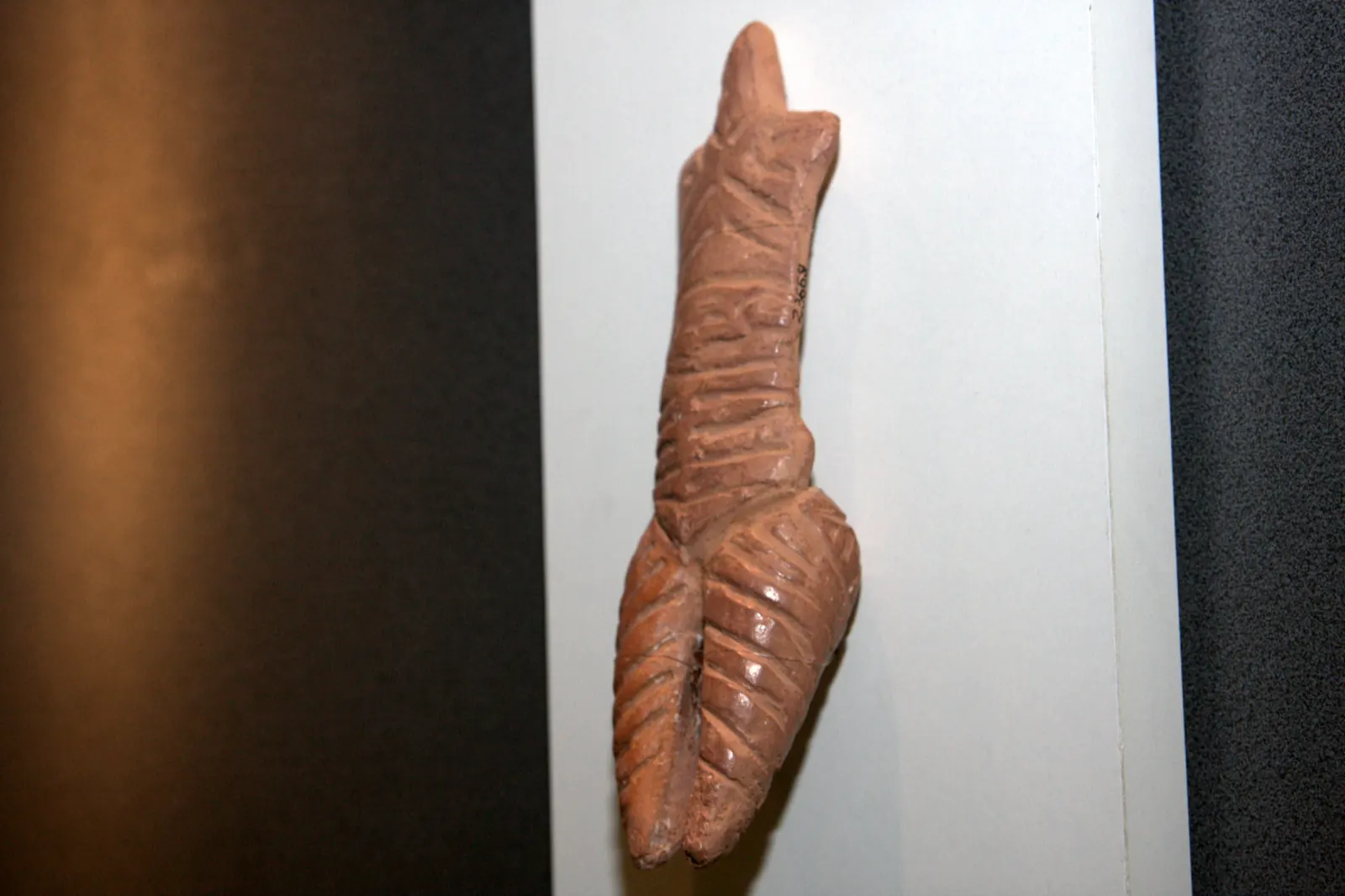
Incised female figurine from Trușești-Țuguieta
This female figurine, 17 centimetres tall, comes from Trușești-Țuguieta, in Botoșani County, and was shaped around 6,300 years ago.
- Period
- Cucuteni A3, c. 4350–4200 BC
- Material
- Fired clay, incisions filled with white; H 17 cm, W 5 cm; inv. MIAPN 23669
- Where it is
- Room 3: masterpieces of Cucuteni figurines, first floor
Read the textHide the text
Narration text
This female figurine, 17 centimetres tall, comes from Trușești-Țuguieta, in Botoșani County, and was shaped around 6,300 years ago. Step closer and look at the surface: the entire body is covered with incised lines, and the grooves were filled with a white paste that makes the design stand out. What do these lines represent?
Some researchers think they are garments; others see tattoos or ritual body painting. Either way, they tell us something important: the people of that time decorated their bodies and expressed identity through signs. Notice the proportions too: broad hips and joined legs, typical of Cucuteni sculpture, emphasise the idea of fertility.
The head is small and stylised. The motifs on the body recall the spirals painted on the vessels in the ground-floor room. Cucuteni artists used the same vocabulary of forms on clay, on vessels and on figurines.